Spy App vs Phone Tracker: What's the Difference?
Compare spy apps and phone trackers by purpose, data coverage, Android requirements, and the situations each type of monitoring tool suits.
By MobileTracker360 Editorial Team · 4 min read
The short answer
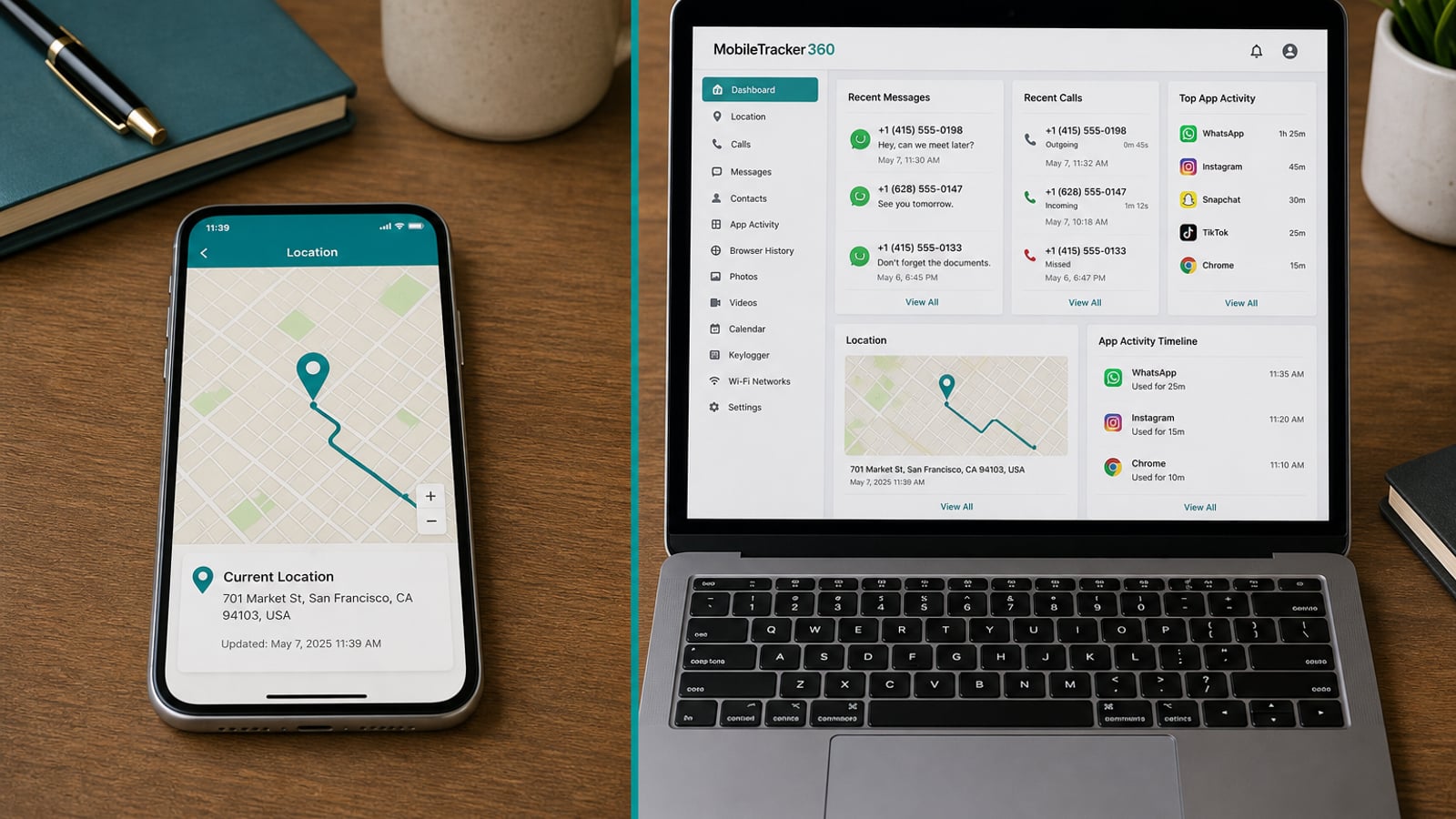
A phone tracker usually centers on where a device is: its current position, recent location history, and sometimes alerts when it enters or leaves a saved place. A spy app or phone-monitoring app usually covers a broader set of device activity, potentially including location, calls, messages, apps, screens, social activity, browser history, and media.
The boundary is not strict. Many mobile tracker apps now include device activity, while many monitoring apps include GPS tracking. The useful distinction is the primary job the product is designed to do, not the label used in an advertisement.
Explore the complete categories on our spy app pillar and the broader Android product model on our mobile tracker page.
What a phone tracker normally focuses on
A location-focused phone tracker uses the supervised device's GPS and network signals to report position to an account or family map. Depending on the product, it may also save previous points, show routes, support check-ins, or notify a parent when the phone arrives at or leaves a defined area.
Its strength is simplicity. If the actual need is school pickup coordination, travel visibility, or arrival alerts, a focused Android location tracker and geofencing can provide the relevant information without exposing unrelated communications or media.
- Current or recently reported location
- Timestamped location history
- Saved places and arrival or departure alerts
- Battery or connectivity context in some products
What a spy app or monitoring app normally covers
A broader monitoring app is designed to organize several categories from an enrolled phone. In addition to location, that may include app activity, screen-time trends, supported calls, messages, social apps, browser activity, photos and videos, screenshots, or device information.
Some products add controls such as app blocking or schedules. Others add temporary live sessions for screen, camera, or audio. Still others analyze supported content and deliver risk alerts instead of showing every record. A product's compatibility page matters as much as its feature page because Android permissions and installation methods determine what can work.
Where the two categories overlap
Both types usually rely on an application installed on or linked to the supervised phone, an authenticated service, and a parent or account-holder dashboard. Both depend on permissions, device connectivity, and background operation. Both can show stale or incomplete information when the phone is offline or Android limits collection.
Location is the largest overlap. A broad phone-monitoring app may offer the same map and history features as a dedicated phone tracker, but location remains only one section of the dashboard.
The main differences at a glance
A phone tracker is usually easier to evaluate because its core question is narrow: how accurately and recently does it report the authorized phone's location? A spy app requires more scrutiny because each data category has separate permissions, limitations, privacy implications, and update behavior.
- Primary purpose: phone trackers emphasize location; monitoring apps emphasize wider device activity.
- Data scope: a tracker may need location only; a monitoring app may request several Android permissions.
- Dashboard complexity: trackers usually show a map and alerts; monitoring apps organize multiple timelines and media types.
- Privacy impact: broader access creates more sensitive data and should have a more specific, justified purpose.
- Live tools: screen, camera, or audio sessions belong to some monitoring apps, not ordinary GPS trackers.
A GPS point does not explain phone activity
Location can answer where a phone reported being and when. It cannot explain who was contacted, which app was active, whether the screen was used for homework, or what happened inside a social platform. Trying to infer those details from a map creates false certainty.
The reverse is also true. App or message activity does not guarantee a current location. Treat each record as one signal and check its timestamp before making a decision.
When a phone tracker is the better choice
Choose a location-focused tracker when the family goal is coordination and place awareness. It is often the more proportionate option for pickup arrangements, independent travel, or an arrival notification at home or school.
Confirm how long history is retained, whether background location works on the exact Android phone, how geofence alerts behave, and what the map shows when the device has not checked in. Consumer tracking should not be treated as guaranteed emergency location.
When a broader monitoring app may make sense
A broader tool may fit when the defined concern involves more than location—for example, understanding screen-time patterns, reviewing supported communication after a specific safety issue, or bringing calls, messages, media, and device activity into one family dashboard.
MobileTracker360 is our Android-focused example of this broader model. It combines location with app activity, communications, media, controls, and supported live tools. Availability still depends on the enrolled device, Android permissions, and connectivity; broader does not mean unlimited or guaranteed access.
How to choose without over-monitoring
Write down the problem before comparing features. If location solves it, stop there. If another activity category is genuinely relevant, add only that requirement and ask how the product obtains, secures, and removes the data.
- Choose the smallest data scope that answers the real family need.
- Verify the exact Android phone, version, and required permissions.
- Separate live sessions from delayed historical reporting.
- Check account security, media access, retention, and deletion.
- Explain the setup and revisit it as the need changes.
Authorized use applies to both
Whether the product is called a phone tracker, mobile tracker, spy app, or parental monitoring tool, use it only on a device you own or have appropriate authority or permission to supervise. Follow applicable notice, consent, privacy, and recording rules.
Terminology does not make a use case lawful or responsible. Purpose, authority, transparency, and proportionate access do.